The Architecture of Excellence: How America's Leading Studios Engineer a Vision Into Reality
The Architecture of Excellence: How America's Leading Studios Engineer a Vision Into Reality
There is a common misconception that great creative work emerges spontaneously — that the right director, the right cast, or the right brief is all it takes for something extraordinary to materialize. The reality, as any seasoned production professional will confirm, is far more structured. Behind every polished film, branded campaign, or immersive media experience lies a carefully engineered process, one that balances creative freedom with operational precision. At Studio P9, we believe that understanding this process is the first step toward producing work that endures.
The Idea Is Only the Beginning
Every production begins with a concept — a seed of intent. But raw ideas, however inspired, are fragile things. The work of a professional studio starts the moment that idea is captured and subjected to rigorous examination. What is the central message? Who is the intended audience? What emotional response does the work aim to provoke?
Leading American studios invest heavily in what is often called the "development phase" — a period of research, competitive analysis, and conceptual refinement that occurs before a single frame is shot or a single asset is designed. Consider the approach taken during the production of large-scale branded content campaigns by studios working with Fortune 500 clients. Teams spend weeks mapping the narrative architecture of a project, identifying the moments of tension, resolution, and emotional resonance that will ultimately define the viewer's experience. This phase is not glamorous. It does not produce visible deliverables. But it is arguably where the most consequential creative decisions are made.
Pre-Production: Where Vision Becomes Blueprint
Once a concept has been stress-tested and refined, the pre-production phase begins. This is the stage at which the abstract becomes concrete. Scripts are drafted and revised. Shot lists are assembled. Location scouts, casting decisions, and production design choices are all made with the final vision firmly in mind.
Professional studios treat pre-production as a form of risk management. Every hour spent planning in this phase reduces the likelihood of costly decisions on set or in the edit suite. Studios like A24 — known for their distinctive aesthetic and consistent critical acclaim — have spoken openly about the importance of extensive pre-production in maintaining tonal coherence across a project. When every department head enters production with a shared visual language, the work that emerges reflects a unified intelligence rather than a collection of individual interpretations.
At Studio P9, our pre-production process involves collaborative briefing sessions in which creative directors, producers, and technical leads align on the project's core visual identity before any production work begins. This alignment is not bureaucratic — it is the foundation upon which everything else is built.
Production: Craft Under Pressure
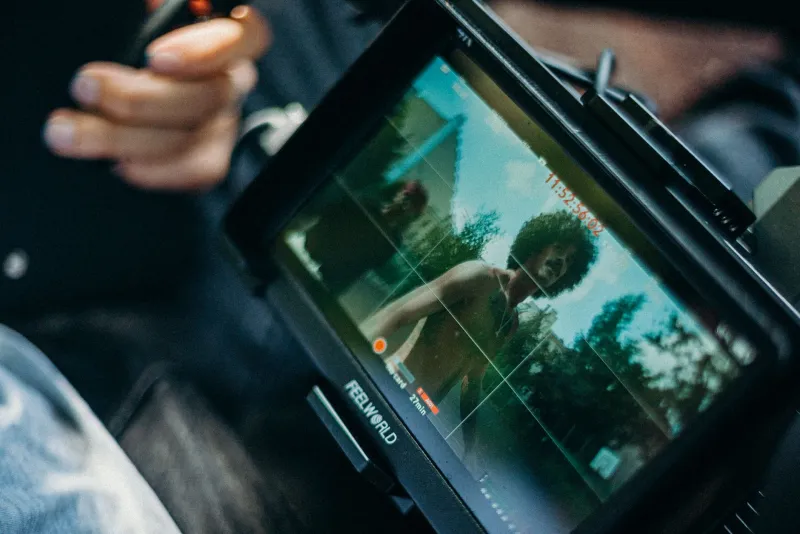
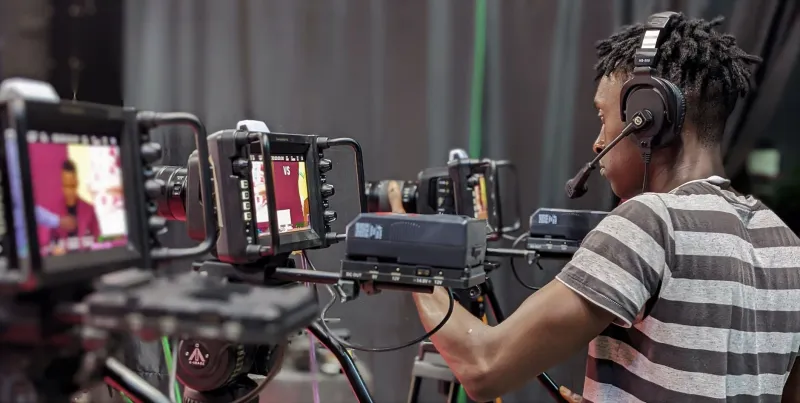
Production is where the blueprint meets reality. It is also where the gap between amateur and professional work becomes most visible. Professional studios do not simply execute a plan — they respond to the unexpected with informed judgment. A location that is no longer available, a lighting condition that shifts mid-shoot, a performance that opens an entirely new interpretive possibility: these are the moments that define a studio's creative character.
The discipline of professional production is not rigidity. It is the capacity to make high-quality decisions quickly, drawing on a deep well of craft knowledge. Cinematographers trained in the language of visual storytelling can redirect a shot in minutes without losing the emotional intent of the original concept. Production designers with a command of color theory can adapt a set dressing on the fly while maintaining the project's established palette.
Documentary production offers a particularly instructive example. Studios producing long-form documentary content for streaming platforms such as Netflix or HBO must balance meticulous pre-production with the inherent unpredictability of capturing real events. The work of production companies like Jigsaw Productions — responsible for acclaimed series including "The Jinx" — demonstrates how rigorous preparation creates the conditions in which authentic, unscripted moments can be captured and shaped into compelling narrative.
Post-Production: Where Everything Is Decided Again
If pre-production is the blueprint and production is the construction, post-production is the refinement. It is also, in many ways, the most misunderstood phase of the creative process. To the uninitiated, editing, color grading, and sound design can appear to be finishing touches. To the professional, they are the final — and often the most powerful — creative instruments available.
The edit suite is where pacing is established, where the emotional rhythm of a piece is tuned, and where the story is ultimately told. A sequence that felt flat on set can be transformed through precise editorial choices. A color grade can shift the psychological register of an entire project. Sound design can make the difference between a scene that is merely watched and one that is felt.
Studios with strong post-production capabilities understand that the footage captured during production is raw material, not finished work. The editorial process is not a mechanical assembly of approved shots — it is a second act of creation, one that requires the same intentionality and craft as every phase that preceded it.
The Invisible Thread: Communication Across Every Phase
What separates studios that consistently produce exceptional work from those that do not is rarely talent alone. It is communication. The ability to maintain a coherent creative vision across a team of writers, directors, cinematographers, editors, and post-production specialists — often working across multiple time zones and production schedules — requires both strong leadership and transparent process.
At Studio P9, we have observed that the most successful productions are those in which every collaborator understands not only their own role, but the broader purpose of the work. When a colorist understands the emotional intent of a scene, they make different — and better — decisions. When an editor understands the strategic goals of a campaign, they approach the assembly of footage with a clarity that serves the work rather than simply the timeline.
Great Work Is Never Accidental
The mythology of creative genius — the idea that masterful work is the product of sudden inspiration or raw talent — does a disservice to the craft. The productions that define a generation, the campaigns that shift cultural conversations, the branded content that builds lasting relationships between companies and their audiences: these are the products of process, discipline, and sustained creative intelligence.
Understanding how leading American studios approach the full arc of production — from the earliest conceptual sessions to the final deliverable — is not merely an academic exercise. It is a practical foundation for anyone who aspires to produce work that is not just completed, but genuinely excellent. At Studio P9, that standard is not an aspiration. It is the baseline from which every project begins.