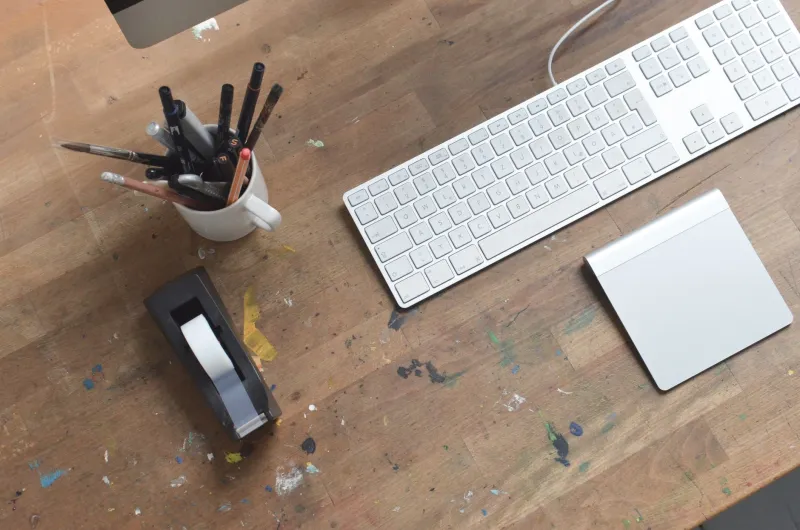
Five Rooms Worth Fighting For: A Case Against the Fully Distributed Studio
Let the record show: distributed creative work is a genuine achievement. Talent pools widened, commutes vanished, and a designer in Portland can color-correct footage shot in Detroit for a client in Atlanta without anyone leaving their kitchen. This is not a nostalgic argument against any of it.
It is an argument that something is quietly lost, and that the studios admitting this — and protecting physical space accordingly — are producing work with a quality that is difficult to fake and harder to remote.
The evidence is anecdotal but persistent. Work reviewed on a shared wall gets revised differently than work reviewed in a browser tab. Decisions that take forty minutes over video often take eight in person, largely because the negotiation of attention happens for free. And the informal collisions — the overheard conversation, the half-finished idea glimpsed on someone's monitor — remain the least replicable feature of any studio, anywhere.
So here, without apology, are the five rooms every serious creative operation should fight to keep.
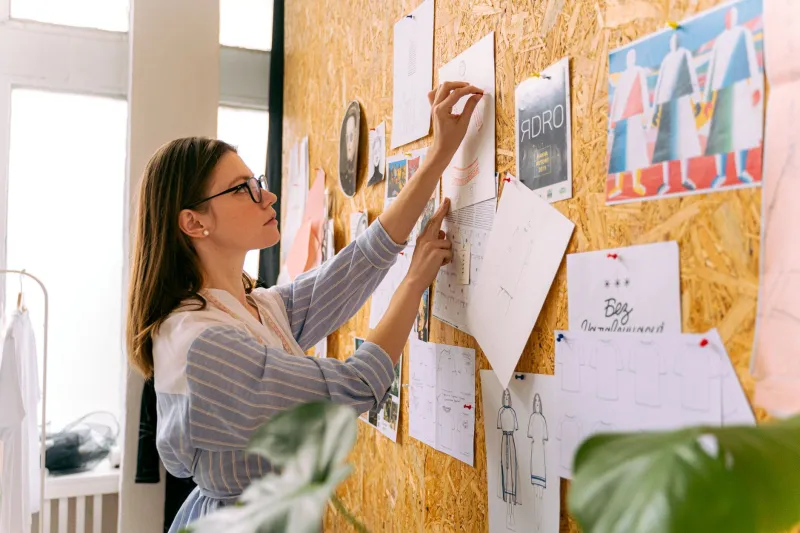
1. The Critique Wall
The single highest-leverage square footage in any studio. Printed work, pinned at eye level, seen in passing by people who were not asked to look at it. The critique wall converts private work-in-progress into ambient organizational knowledge. It also forces a kind of honesty screens flatten: scale, hierarchy, and rhythm reveal themselves differently at full size, and problems surface days before a formal review would catch them.
2. The Screening Room
For motion work, this is non-negotiable. Reviewing a cut on a laptop is like mixing an album on earbuds on a bus. A darkened room, a calibrated display, and an audience of colleagues seated together produce reactions that no grid of webcam faces can replicate — the collective silence before someone speaks, the moment a room laughs or doesn't. Editing decisions improve measurably when the room's reaction is real.
3. The Maker Space
Somewhere with a hot glue gun, a shelf of materials, foam core, and permission to get glue on things. Physical prototyping — even crude — changes the questions a team asks. A paper mockup of an interface exposes flow problems that a Figma file conceals. A quick package study in folded cardstock teaches more in an hour than a week of renders. Studios without a maker space tend to stop making things, and it shows.
4. The Messy Printer Corner
This sounds like a joke and is not. The printer corner — the temperamental wide-format machine, the paper scraps, the trimmer, the drawer of Pantone chips — is where senior and junior people cross paths without a meeting request. Knowledge transfer in creative studios happens disproportionately in these low-stakes zones. Guard them.
5. The Client Room
Not a conference room. A room designed to show work in its best light, where clients sit in the same seat, see the work at the same scale, and experience the studio's standards physically. Presentation is craft, and the room is part of the craft. Teams that present in this setting report shorter feedback loops and fewer rounds of revisions — the work reads as finished because the environment insists on it.
The Honest Caveat
None of this requires a lease on a loft in a converted warehouse. It requires intention. A floor of a shared building can house all five rooms. What cannot be compromised is the commitment that certain activities — critique, screening, final presentation — happen in a shared physical space, on a rhythm, with everyone in it.
Hybrid is not the enemy of craft. Absence of place is. Studios that let every room dissolve into a calendar link should not be surprised when the work starts to feel like it was made by a calendar link too.