The Myth of the Lone Visionary: Why America's Greatest Creative Work Is Always a Team Sport
The Myth of the Lone Visionary: Why America's Greatest Creative Work Is Always a Team Sport
There is a version of creative history that most of us absorbed without questioning it. It goes something like this: a singular genius — possessed of extraordinary vision, working in near-isolation, perhaps misunderstood by the world around them — produces a masterwork that changes culture. The director. The auteur. The mad scientist of design.
It is a compelling story. It is also, in almost every meaningful case, a fiction.
The most celebrated American films, advertising campaigns, and branded content of the last decade were not the products of individual brilliance operating in a vacuum. They were the outputs of highly intentional, carefully structured creative teams — collectives of directors, producers, designers, strategists, editors, and composers whose individual contributions were so tightly interwoven that separating them would be like trying to isolate a single instrument from a symphony and call it the music.
The lone genius is a myth. The collaborative room is where the actual work happens.
The Credits Do Not Lie
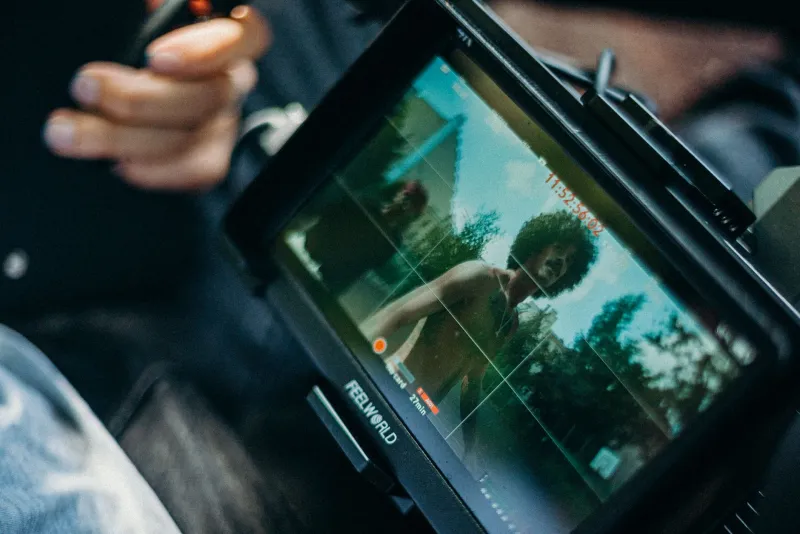
Consider the body of work that American audiences have most celebrated over the past decade. Get Out, Jordan Peele's genre-defining debut, is frequently discussed as a singular artistic vision — and Peele's creative intelligence is undeniable. But the film's extraordinary effectiveness owes as much to the work of cinematographer Toby Oliver, composer Michael Abels, and producers Jason Blum and Sean McKittrick as it does to its director. The vision required a room to become a reality.
Or consider the advertising landscape. The campaigns that have most successfully shaped brand identity in the US — from Nike's emotionally charged long-form spots to Apple's product launches — are products of agencies, internal creative teams, and production companies operating in structured collaboration. The individuals who conceive the initial idea and the individuals who execute it are rarely the same people. The gap between them is where professional creative production lives.
This is not a diminishment of individual talent. It is an honest accounting of how creative excellence actually functions at scale.
The Structure Beneath the Magic
What separates high-performing creative teams from loosely assembled groups of talented individuals is not the quality of the talent — it is the intentionality of the structure.
The best studios in America do not simply hire skilled people and trust proximity to produce results. They design their teams the way architects design buildings: with a clear understanding of how different functions relate to one another, where load-bearing responsibilities sit, and how information and creative energy should flow through the system.
In practical terms, this means defining roles with precision. A creative director and an art director are not interchangeable titles for the same job. A producer and a project manager serve fundamentally different functions. A strategist and a copywriter approach language from entirely different frames of reference. When these roles are clearly defined and properly staffed, the team operates with a clarity that makes ambitious work possible.
When they are blurred — when one person is expected to be both the visionary and the executor, both the client relationship and the creative conscience — the work suffers. Not because the individual is not talented, but because the cognitive and creative demands of those roles are genuinely in tension with one another.
Collaboration as a Competitive Advantage
There is a business argument here, not just a creative one.
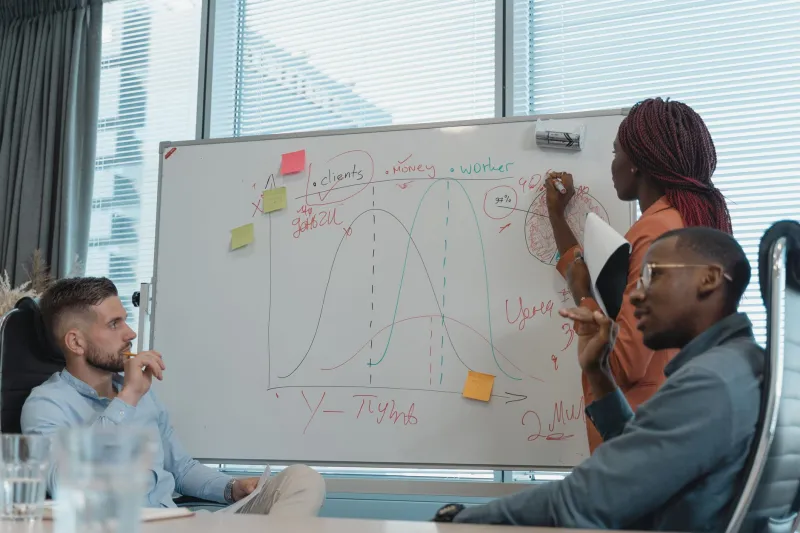
Studios that are built around genuine collaboration — where the strategist's insight shapes the director's approach, where the designer's visual instincts inform the producer's budgetary decisions, where every discipline has a seat at the table before the first decision is locked — produce work that is more coherent, more effective, and more durable than work produced by any single perspective.
This is not intuition. It is borne out by the economics of the industry. The production companies and creative studios that have sustained relevance and grown their client rosters over the last decade are, almost without exception, the ones that have invested in building collaborative infrastructure rather than cultivating individual stars.
The star model — built around a single high-profile creative whose personal brand attracts clients — is inherently fragile. The collaborative model — built around a culture and a process that consistently produces excellent work regardless of which individuals are in the room on a given day — is a sustainable business.
The Room Where It Happens
There is a concept in organizational psychology sometimes referred to as 'collective intelligence' — the measurable phenomenon whereby groups of people, under the right conditions, consistently outperform even the highest-performing individuals within those groups on complex creative and analytical tasks.
The conditions matter enormously. Collective intelligence does not emerge from simply aggregating smart people. It emerges from teams characterized by psychological safety, equitable participation, and a shared orientation toward the work rather than individual recognition.
This is why building the right room matters more than finding the right individual.
A team of eight people where every voice carries weight, where dissent is welcomed rather than suppressed, where the best idea wins regardless of its origin — that team will consistently produce more interesting, more effective, and more surprising work than a team organized around protecting the vision of a single authority.
The best creative directors in America understand this intuitively. Their authority is not expressed through control — it is expressed through curation. They create the conditions in which other talented people can do their best work, and they exercise judgment about which of those contributions serves the project's larger purpose.
What This Means for How Studios Should Be Built
For studios and production companies operating in the current American media landscape, the implications are concrete.
Invest in culture before you invest in talent acquisition. The most gifted designer or director will underperform in a structure that does not support genuine collaboration. Conversely, a team of solid, committed professionals operating within a well-designed collaborative culture will regularly produce work that exceeds what their individual portfolios might suggest.
Build processes that formalize collaboration. The best creative teams do not rely on chemistry alone — they have structured touchpoints, defined feedback loops, and shared language for discussing creative decisions. These structures do not constrain creativity; they create the conditions in which creativity can be trusted.
And resist the temptation to build your studio's identity around a single personality. The most resilient creative organizations are those whose identity is defined by their output and their process, not by the biography of their founder.
The Studio P9 Perspective
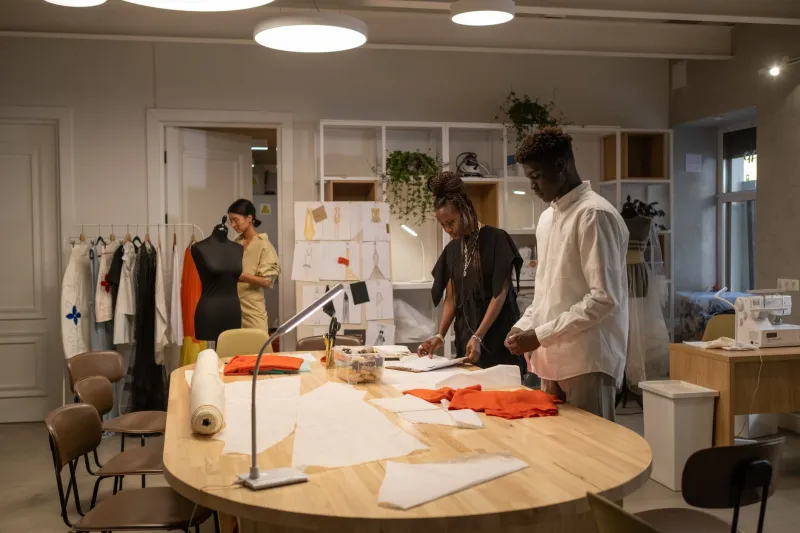
At Studio P9, this is not an abstract philosophical position — it is the operating principle behind every project we take on. Our work is produced through the deliberate collaboration of directors, designers, producers, and strategists who each bring a distinct and necessary perspective to the table.
The work that results is not any one person's vision. It is something better: the product of multiple intelligences, working in concert, toward a shared goal.
That is not a compromise. That is the point.
The lone genius makes for a great movie poster. The intentional team makes great work. We know which one we would rather be.