Second Lives: The Quiet Business of Making Old Work Pay Again
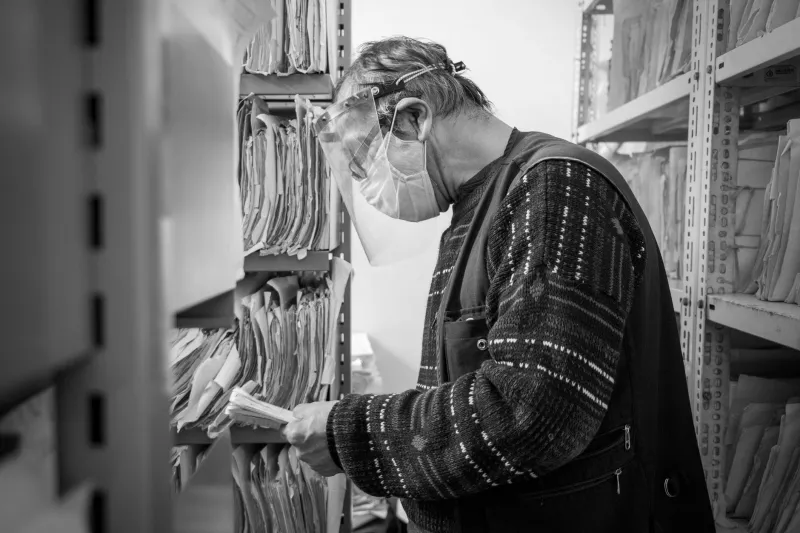
Somewhere in nearly every established American studio is a hard drive — or a filing cabinet, if the shop is old enough — holding years of work that will never be billed again. Campaigns that ran their course. Identity systems for brands that have since rebranded. Film that aired twice and retired.
For most of the industry's history, that archive was dead weight. Increasingly, it is inventory.
The Archive as Revenue Line
The mechanics vary, but the categories have stabilized. Design systems — the grids, type scales, and component libraries built for one client at considerable cost — are being licensed, with permissions, to adjacent brands or internal divisions that could never have funded original development. Campaign work is being adapted for new markets and new media, with the heavy strategic lifting already amortized. And a growing number of studios are selling the story behind the work: process documentaries, breakdown posts, behind-the-scenes publications that monetize expertise rather than output.
The economics are straightforward. An archive carries no incremental production cost and no incremental risk. Margin on a licensing deal approaches pure profit. For studios navigating the feast-and-famine rhythm of client work, recurring archive income is not vanity — it is ballast.
Where the Line Sits
But every studio that has walked this road has encountered the same cliff edge, and the smart ones can describe it precisely. Archive monetization ends and brand dilution begins at the moment the work stops being a demonstration of capability and starts being a product in itself.
The distinction plays out in several tests. First: does the reuse require the same standard of craft as the original? A design system adapted for a new market with genuine strategic thought reinforces the studio's reputation. The same system resold with a logo swap signals that the studio's thinking is off the shelf.
Second: whose story is it? Client relationships impose obligations that outlast invoices. Rights, territory, and duration negotiated in the original contract determine what a studio may even consider — and studios that skipped that diligence have learned, expensively, that a client's brand equity is not theirs to relaunch.
Third: does the archive work still represent who the studio is? An identity project from a decade ago may no longer reflect the shop's current ambition. Licensing work you would not do today is a quiet form of self-redefinition, and rarely the kind intended.
The Reputation Multiplier
The most successful archive strategies treat the back catalog as proof, not product. A process film released publicly does double duty: it earns direct revenue or audience, and it functions as the most persuasive pitch asset a studio owns, because it shows how the work was made, not just what was made.
Studios in Los Angeles, New York, and increasingly mid-sized markets like Kansas City and Austin have built entire secondary practices on this principle — retrospectives, museum placements, published monographs that keep decades-old work circulating as living evidence of standards.
The discipline, in every case, is the same: monetize the thinking, protect the work. The moment a piece of archived creative appears in a context the studio would not have chosen for it, the discount begins — and audiences, who care more about brand coherence than studios assume, notice before anyone files a memo.
A Closing Thought
An archive is a record of judgment exercised over time. Handled with the same care as new work, it compounds: every licensed system, every adapted campaign, every process story reinforces the central claim a studio makes to clients — that its judgment is worth paying for, repeatedly, across years.
Handled carelessly, it becomes a yard sale. The difference is not the inventory. It is the stewardship.